Want to unlock explosive growth for your business? A powerful b2b marketing strategy isn’t just helpful—it’s essential. In today’s competitive landscape, understanding how to connect, convert, and retain business clients can make or break your success.
B2B Marketing Strategy: Understanding the Core Principles

At its foundation, a b2b marketing strategy is about selling products or services from one business to another. Unlike B2C (business-to-consumer) marketing, which often appeals to emotions and impulse, B2B decisions are typically driven by logic, ROI, and long-term value. This means your strategy must be built on trust, data, and clear communication of benefits.


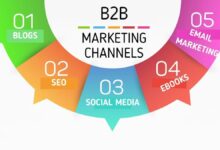
What Defines B2B Marketing?
B2B marketing involves complex sales cycles, multiple stakeholders, and higher transaction values. It’s not about flashy ads or quick clicks—it’s about building relationships and proving your solution solves a real business problem. According to Forbes, over 70% of B2B buyers now expect personalized experiences similar to B2C, blurring the lines but maintaining the logic-first approach.
- Sales cycles are longer and involve more decision-makers.
- Content must be educational, not just promotional.
- Success is measured by lead quality, not just volume.
Key Differences Between B2B and B2C Marketing
While both aim to drive sales, the approach differs significantly. B2C marketing often targets individual consumers with emotional triggers and instant gratification. In contrast, a solid b2b marketing strategy focuses on demonstrating long-term value, integration capabilities, and measurable outcomes.
- B2B: Rational decision-making, longer sales funnel, relationship-driven.
- B2C: Emotional appeal, shorter purchase cycle, brand loyalty-focused.
- Marketing channels differ—B2B leans heavily on LinkedIn, whitepapers, and webinars.
“B2B buyers are no longer just evaluating features—they’re evaluating experiences.” — Gartner
Why a Solid B2B Marketing Strategy Is Non-Negotiable
In an era where digital presence defines credibility, skipping a structured b2b marketing strategy is like flying blind. Companies that invest in strategic marketing see up to 2.5x higher revenue growth than those that don’t, according to McKinsey.
Driving Revenue Through Strategic Positioning
A well-crafted b2b marketing strategy aligns your messaging with customer pain points, ensuring every touchpoint moves prospects closer to a sale. It’s not just about visibility—it’s about relevance. When your content speaks directly to a CFO’s budget concerns or an IT manager’s security needs, conversions follow.
- Strategic positioning increases perceived value.
- Clear messaging reduces friction in the sales process.
- Targeted outreach improves lead-to-customer conversion rates.
Building Trust in a Skeptical Market
B2B buyers are more informed—and more skeptical—than ever. They research independently, read reviews, and compare solutions before engaging with sales teams. A strong b2b marketing strategy builds trust early through thought leadership, case studies, and transparent communication.
- 89% of B2B buyers say trust is the most important factor in choosing a vendor (Edelman).
- Trust is built through consistency, proof, and credibility.
- Marketing assets like testimonials and ROI calculators reinforce reliability.
Essential Components of a Winning B2B Marketing Strategy
A successful b2b marketing strategy isn’t built on guesswork. It’s a structured framework combining audience insight, content, technology, and performance tracking. Let’s break down the core components that make it work.
Defining Your Target Audience with Precision
You can’t market effectively if you don’t know who you’re talking to. In B2B, this means going beyond demographics to understand firmographics—company size, industry, revenue, tech stack, and decision-making structure.
- Create detailed buyer personas for each stakeholder (e.g., end-user, influencer, decision-maker).
- Use tools like LinkedIn Sales Navigator or ZoomInfo to gather firmographic data.
- Map pain points to specific roles (e.g., CMOs care about ROI, IT cares about integration).
Developing a Value-Driven Messaging Framework
Your message should answer one question: “Why should they care?” A strong b2b marketing strategy uses a value proposition that clearly articulates how your solution solves a critical business problem better than alternatives.
- Focus on outcomes, not features (e.g., “Reduce operational costs by 30%” vs. “Cloud-based platform”).
- Use customer language, not jargon.
- Align messaging across all channels—website, email, social, sales decks.
Leveraging Multi-Channel Distribution
Even the best message fails if it doesn’t reach the right people. A modern b2b marketing strategy integrates multiple channels to meet buyers where they are—whether that’s LinkedIn, industry forums, email, or search engines.
- Paid ads on LinkedIn and Google for targeted reach.
- Organic content on blogs and YouTube for long-term authority.
- Email nurturing sequences to guide leads through the funnel.
B2B Marketing Strategy: The Power of Content Marketing
If your b2b marketing strategy doesn’t include content marketing, you’re missing a massive opportunity. Content isn’t just about blogs—it’s about creating assets that educate, engage, and empower your audience throughout their buying journey.
Creating High-Value Content for Each Stage of the Funnel
Top-of-funnel content (TOFU) attracts awareness with broad topics like “What is cloud security?” Middle-of-funnel (MOFU) content compares solutions, such as “SaaS vs. On-Premise CRM.” Bottom-of-funnel (BOFU) content drives decisions with case studies, demos, and pricing guides.
- TOFU: Blog posts, infographics, social media content.
- MOFU: Whitepapers, webinars, comparison guides.
- BOFU: Case studies, free trials, consultation offers.
Using Thought Leadership to Build Authority
B2B buyers don’t just want vendors—they want partners. Publishing insightful research, industry reports, or expert commentary positions your brand as a leader. For example, HubSpot’s annual “State of Inbound” report generates thousands of high-quality leads each year.
- Share original data and insights from customer interactions.
- Contribute guest articles to industry publications.
- Host expert panels or roundtable discussions.
“Content is the fuel of modern B2B marketing. Without it, your strategy stalls.” — Ann Handley, Chief Content Officer at MarketingProfs
Leveraging Data and Technology in Your B2B Marketing Strategy
Gone are the days of spray-and-pray marketing. Today’s b2b marketing strategy must be powered by data and automation. From CRM systems to AI-driven analytics, technology enables precision targeting and measurable results.
Implementing Marketing Automation Tools
Automation tools like HubSpot, Marketo, or Pardot allow you to deliver personalized content at scale. You can trigger emails based on behavior, score leads based on engagement, and sync data with your sales team in real time.
- Automated email workflows nurture leads without manual effort.
- Lead scoring prioritizes high-intent prospects for sales follow-up.
- Integration with CRM ensures seamless handoff from marketing to sales.
Using Analytics to Optimize Performance
A b2b marketing strategy without analytics is like driving without a GPS. Tools like Google Analytics, LinkedIn Insights, and marketing dashboards help you track KPIs such as lead conversion rates, cost per acquisition, and customer lifetime value.
- Monitor traffic sources to double down on what works.
- Track content performance to refine your editorial calendar.
- Use A/B testing to optimize landing pages and CTAs.
B2B Marketing Strategy: The Role of Account-Based Marketing (ABM)
Account-Based Marketing (ABM) is one of the most powerful evolutions in b2b marketing strategy. Instead of casting a wide net, ABM focuses on targeting high-value accounts with personalized campaigns tailored to their specific needs.
What Is ABM and How Does It Work?
ABM treats individual accounts as markets of one. Marketing and sales teams collaborate to identify key accounts, research their challenges, and deliver hyper-personalized content and outreach. According to ABM Institute, companies using ABM report 200% higher sales pipeline efficiency.
- Identify target accounts based on strategic fit and revenue potential.
- Develop custom content and landing pages for each account.
- Use direct mail, personalized video, and targeted ads to engage decision-makers.
Integrating ABM into Your Overall B2B Marketing Strategy
ABM shouldn’t exist in a silo. It must be integrated with your broader b2b marketing strategy. For example, content created for ABM campaigns can be repurposed for broader demand generation efforts.
- Align sales and marketing teams on target account lists.
- Use shared KPIs like account engagement score and revenue influenced.
- Leverage CRM and ABM platforms like Terminus or 6sense for orchestration.
Measuring Success: KPIs for Your B2B Marketing Strategy
You can’t improve what you don’t measure. A data-driven b2b marketing strategy relies on clear KPIs to evaluate performance and guide decision-making. These metrics go beyond vanity numbers like page views to focus on business outcomes.
Key Metrics to Track
Not all metrics are created equal. Focus on those that reflect real business impact:
- Lead Conversion Rate: Percentage of leads that become customers.
- Customer Acquisition Cost (CAC): Total marketing and sales spend per new customer.
- Customer Lifetime Value (CLTV): Total revenue expected from a customer over time.
- Marketing Qualified Leads (MQLs): Leads deemed ready for sales follow-up.
- Return on Ad Spend (ROAS): Revenue generated per dollar spent on ads.
Using Dashboards for Real-Time Insights
Modern marketing teams use dashboards to visualize performance across channels. Tools like Google Data Studio, Tableau, or native platform analytics provide real-time visibility into campaign effectiveness.
- Custom dashboards help identify underperforming channels.
- Real-time data enables quick pivots and optimizations.
- Executive summaries keep leadership aligned on marketing ROI.
Future-Proofing Your B2B Marketing Strategy
The B2B landscape is evolving fast. AI, predictive analytics, and buyer autonomy are reshaping how companies market to each other. To stay ahead, your b2b marketing strategy must be agile, adaptive, and customer-centric.
Embracing AI and Predictive Analytics
AI is no longer science fiction—it’s a marketing tool. From chatbots that qualify leads to predictive lead scoring that identifies high-intent prospects, AI enhances efficiency and personalization.
- Use AI-powered tools like Drift or Conversica for lead engagement.
- Predictive analytics can forecast which accounts are most likely to convert.
- AI-driven content tools help generate personalized emails and landing pages.
Adapting to Changing Buyer Behavior
Today’s B2B buyers are self-sufficient. Gartner reports that buyers complete 70% of their journey before ever speaking to a sales rep. This means your b2b marketing strategy must provide value early and often—through educational content, interactive tools, and transparent pricing.
- Invest in self-serve resources like knowledge bases and ROI calculators.
- Enable digital buying experiences with e-commerce capabilities.
- Focus on post-purchase engagement to drive retention and expansion.
What is the most important element of a b2b marketing strategy?
The most important element is a deep understanding of your target audience. Without knowing their pain points, goals, and decision-making process, even the most creative campaigns will fall flat. Audience insight drives messaging, channel selection, and content strategy.
How long does it take to see results from a b2b marketing strategy?
Results typically appear within 3–6 months, but full ROI may take 12+ months due to longer sales cycles. Early wins include increased website traffic and lead volume, while revenue impact comes later as leads move through the funnel.
Is social media important for B2B marketing?
Yes, especially LinkedIn. Over 80% of B2B leads come from LinkedIn, making it the most effective social platform for professional outreach, brand building, and content distribution in a b2b marketing strategy.
Should I outsource my b2b marketing strategy?
It depends on your resources and expertise. Many companies start with in-house efforts and later partner with specialized B2B marketing agencies for scaling. Outsourcing can bring fresh perspectives and advanced tools, but alignment with your brand voice is crucial.
How do I align sales and marketing in my b2b marketing strategy?
Alignment starts with shared goals, regular communication, and integrated tools. Implementing Service Level Agreements (SLAs) between teams, holding joint planning sessions, and using shared CRM platforms ensures both teams work toward the same outcomes.
A winning b2b marketing strategy is not a one-time project—it’s an ongoing process of research, execution, measurement, and refinement. By focusing on audience insight, value-driven content, data-powered tools, and continuous optimization, you can build a strategy that drives sustainable growth. The future of B2B marketing belongs to those who adapt, personalize, and deliver real business value at every touchpoint.
Further Reading:
